




The Five Requirements Every Application Needs
When people think about admission to top universities, they often think about GPA and test scores.
These are a necessary standard, but the most competitive universities in the United States consistently look for one defining quality in students: leadership.
Not leadership in the sense of controlling others or holding a title.
Instead, universities are looking for students who demonstrate the ability to lead themselves.
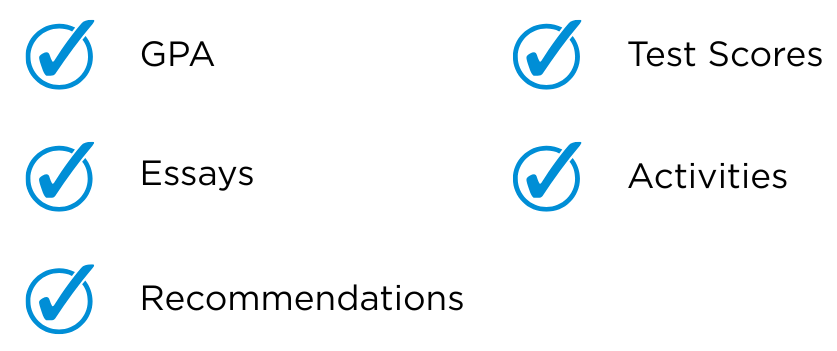
These items form the checklist every agent and every school knows well.
But here is the mistake almost every family makes:
In reality, admissions officers are not looking for boxes checked.
They are looking for a person—someone whose choices, voice, and values align across all five components.
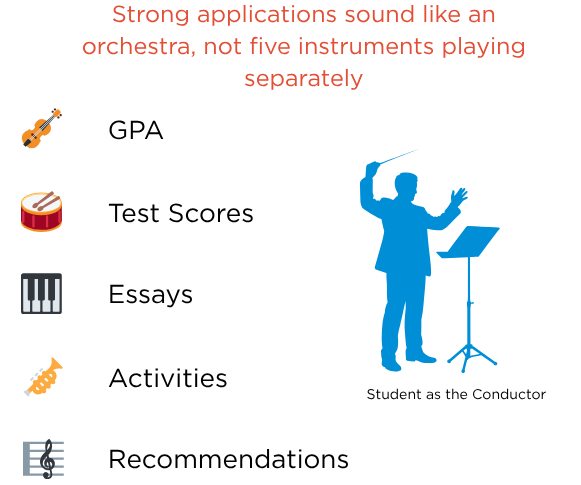
Beyond the Checklist: What Admissions Officers Actually See
A powerful application feels unified. The pieces “talk to each other.”
Character becomes visible when GPA, essays, recommendations, and activities all illuminate the same underlying story.

Cultivating a Theme
Marc Zawel, long-time admissions expert, puts it perfectly:
“Character shows up everywhere in an application. Essays reveal curiosity and self-awareness. Recommendations bring integrity and collaboration to life. Activities show commitment and follow-through—not based on how many things a student does, but what they actually do with them.
When a student’s story, choices and reflections all point to the same themes, it feels authentic. That’s what stands out.”
In other words, the strongest applicants can be understood in one clear phrase:
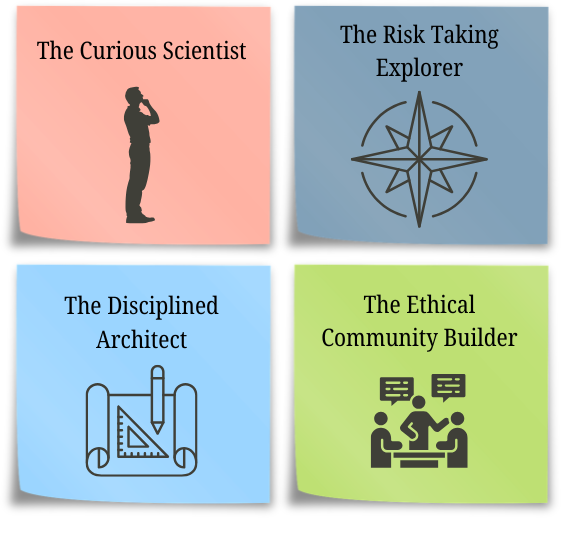
Admissions committees read a file and instantly recognize a type of person.
Each requirement becomes a spotlight forming one clear silhouette in the middle.
A Real Example: The “Ethical Community Builder”
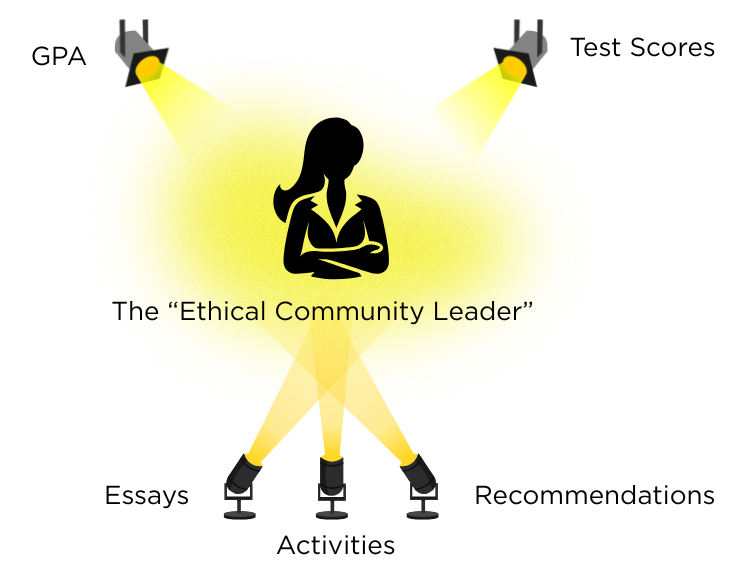
An excellent example of this is Maria, whose essay is published by Johns Hopkins University as a model for applicants.
(You can read it here: JHU Essays That Worked – “Salt”)
The JHU admissions committee wrote:

Her profile—across essay, activities, and recommendations—reveals her recognizable “shape”: the “ethical community builder.”
This is the level of cohesion top universities reward.
How Does A Student Develop This Cohesion?
This is where most students struggle:
You cannot invent a “type of person” the week before the application is due.
It develops over years, through:
- Intentional leadership opportunities
- Deep self-reflection
- Strong mentoring
- Academically rigorous experiences
- Real responsibility and community engagement
And that brings us back to the larger theme of our recent articles:
Together, these pieces explore a simple truth:
In the age of AI, universities want thinkers and leaders—not test-takers.
Students need environments that push them to explore ideas, develop character, and build a record of choices that reflect who they really are.
Why Guilford Produces These Standout Profiles
- They earn real college credits while in high school.
- They receive personalized mentoring from faculty who know them deeply.
- They develop leadership through research, service, and campus involvement.
- They learn in a liberal arts environment that builds thinkers—not formula followers.
- Their application narratives grow naturally from years of authentic growth.
Guilford doesn’t just help students “check the boxes.”
They help students become the kind of people universities want to admit.
For agents and families looking for the next edge in U.S. admissions, especially for ambitious international students, this distinction makes all the difference.
